

Bridging Borders in Protein Design in Latin America – The AI4PD Workshop in Patagonia
Puerto Varas, Chile — in November, the stunning landscapes of Chilean Patagonia, including the Llanquihue lake and the Osorno and Calbuco volcanoes, served as the backdrop for a groundbreaking scientific convergence. The EMBO Practical Course: Latin American Workshop on AI for Protein Design (AI4PD) 2025, co-organized by RosettaCommons members Cesar A. Ramirez-Sarmiento (UC Chile), Alena Khmelinskaia (LMU Munich) and Chris Bahl (AI Proteins Inc), and by Nicole Lehna (Kura Biotech), brought together a vibrant community of researchers from different corners of the world to push the boundaries of computational protein structure prediction and design in Latin America.
This event, held from November 3–9, 2025 at the Hotel Bellavista in Puerto Varas, is the second version since 2023 of a pioneering initiative to train the next generation of scientists from Chile and Latin America in computational protein design. It gathered over 55 students, postdoctoral researchers, faculty, and industry members, 44% of which were female scientists, which were selected among an overwhelming total of more than 300 applications from across the region and the globe. These selected attendees, 31 of which were PhD students from Chile, Argentina, Peru, Brazil, Ecuador and Colombia, with some attendees coming from as far as Japan, joined forces for 5 days with 18 international experts in the latest artificial intelligence tools revolutionizing protein design from renowned institutions such as UCSF, Harvard, Johns Hopkins University, University of Washington, Leipzig University, TU Graz, LMU Munich and Pontificia Universidad Catolica de Chile.
A Curriculum on the state of the art in computational protein design
In recent years, AI has fundamentally transformed the study of proteins, enabling scientists to predict structures and design novel proteins not found in nature to solve modern biotechnological problems. As such, the workshop was designed to be an intensive, immersive experience throughout the whole week.
Participants dove into this rapidly evolving field through a blend of introductory lectures and hands-on tutorials during the first 3 days of the Practical Course. The curriculum covered state-of-the-art tools such as Frame2Seq, ProteinMPNN, and different versions of RFdiffusion, allowing attendees to connect theory with real-world applications in protein engineering and design, from peptides to antibodies to enzymes to macromolecular assemblies..
The Hackathon: Collaboration in Action
A standout feature of AI4PD was the Hackathon — a dedicated space for trainees to apply their new skills to concrete challenges. For many, this was the highlight of the week, offering a realistic learning experience where participants could tackle open-ended problems guided by leading professionals. Assembled in groups of four, attendees worked on their own protein design problems and pipelines and wrapped up their projects by presenting the results of their work during a final flash talk session – with a surprise online appearance of David Baker from the Institute for Protein Design at the University of Washington to encourage the participants.
The feedback from the workshop was overwhelmingly positive, with 85% of attendees giving the introductory lectures the highest possible rating for enjoyment, and 91% praising the speakers and instructors as highly knowledgeable and effective in delivering the content. Moreover, participants described the Hackathon as a unique opportunity to deepen their understanding of the tools while working side-by-side with peers and experts. The collaborative atmosphere fostered during these sessions was rated with the highest score by 85% of attendees for allowing them to deepen their understanding of the different tools they utilized.

Building a Community
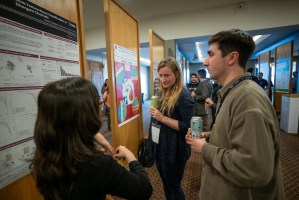
Beyond the code and the chemistry, AI4PD was about building bridges. The choice of Puerto Varas provided a “retreat-style” feel that encouraged meaningful networking. Whether discussing poster presentations during Monday and Tuesday nights with pizzas and beers, hiking through the natural beauty of the region by visiting the Alerce Andino National Park on Saturday, or having a farewell dancing party on Saturday night, the environment created a space for dialogue between academia and industry.
As a result, 100% of participants said they would recommend future iterations of the AI4PD workshop to colleagues; 100% stated they are likely to deepen their understanding of these tools in the future; and 94% confirmed they are likely to apply these protein design tools in their future research.
Some attendees noted that:
- “The way the instructors were so kind and attentive, coming to our desks to teach and explain step by step what we were doing, definitely contributed a lot to my learning.”
- “Spending several days together with the other participants created a really nice environment to connect and share ideas in a meaningful way”.
- “I really liked that it was one of the most up-to-date courses I’ve ever attended, and it was great to see what is currently happening in the protein design field.“
The success of AI4PD 2025 demonstrates the immense potential of the Latin American scientific community when provided with access to cutting-edge training and a network of global collaboration. We look forward to seeing the innovations this new generation of protein designers will create.

Acknowledgments
This event would not have been possible without the support of our incredible partners who are committed to advancing science in Latin America. We gratefully acknowledge the backing of the European Molecular Biology Organization (EMBO) and RosettaCommons as our main sponsors, as well as The Protein Society, the Institute for Biological and Medical Engineering from UC Chile, the Center for Bioinformatics and Integrative Biology from Universidad Andrés Bello, the School of Embedded Composite Artificial Intelligence (SECAI) from TU Dresden and Leipzig University, and the companies AI Proteins, Kura Biotech, Patagonia Biotech Hub, Google Colab, Hotel Bellavista and Cerveza Tropera.