
Where We Came From
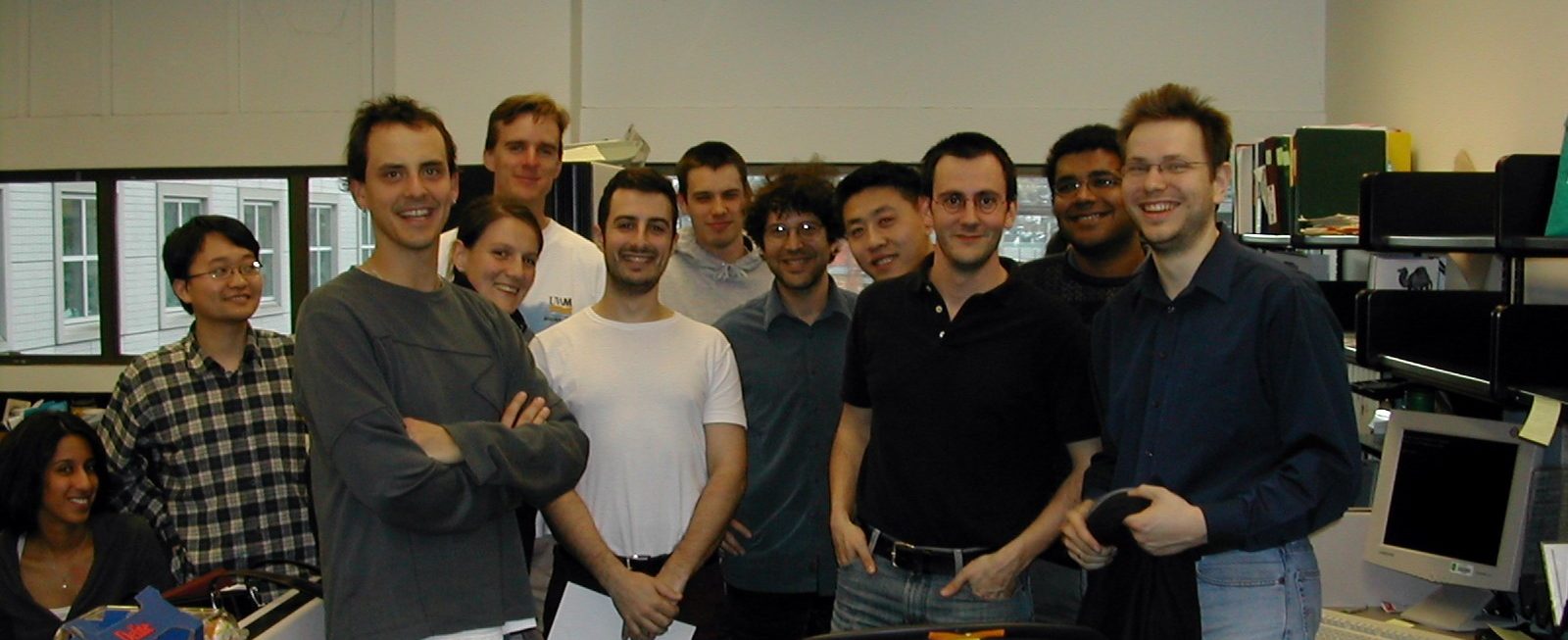
The original Rosetta code (in Fortran!) was developed in David Baker’s group at the University of Washington. Rosetta quickly became a leading tool for protein structure prediction, docking, and design, and it spurred many related application areas. Around 2003-2005 when several Baker lab members established independent research groups, we formed the Rosetta Commons to facilitate collaboration on the ongoing development of Rosetta across institutions. The Rosetta Commons is an agreement between signatory institutions to share the intellectual property that forms the core Rosetta code. Individual member labs received grants from various funding agencies to create new modeling algorithms and methods, and these works were also added to the core Rosetta code. The Commons has since grown to over 100 labs with contributions from hundreds of scientists and developers. The Rosetta Commons’ scientific leadership, scope, and utility derived from the collaborative nature of our community, which welcomed expertise and contributions across disciplines, institutions, international borders, and economic sectors. We will continue to foster this ethos as the AI revolution adds new codes and communities to our collaboration.
Rosetta’s capabilities for solving complex, real-world problems brought interest from industry, primarily to accelerate drug discovery. To ensure Rosetta was reliable, usable, and well-tested (for both academics and industry!), we created fee-based licenses for for-profit organizations, where all revenues were invested back into our community to advance the software. This support was critical in a world before tools like GitHub. License fees have supported servers for our shared code, creation of documentation and code testing platforms, in-person code-focused hackathons, creation of ROSIE and its back-end servers for hosting web apps, code schools, outreach delegations, and summer intern and post-baccalaureate programs. The annual RosettaCON in the Cascade Mountains in Washington State began as something closer to a giant code review and has developed into not only a world-class scientific meeting but an event where collaborations, lasting friendships, and a distinct community identity are formed.
As we leverage the latest technologies to develop new tools in new ways, we see that the role of a shared, centralized codebase is changing. Many AI models are developed within a single lab or research group and are released under permissive, free, and open-source software (FOSS) licenses. FOSS is a powerful means by which to accelerate adoption and shared development across industry and the academy, and we are committed to identifying new revenue models (including our investment in Levitate Bio) to sustain and grow our community and to maintain our high standards for tooling.
Our ability to reliably predict the structures of and design novel biomolecules has advanced to the point where it is clear that we are at the doorstep of a new era in human history - one where we can control matter at atomic resolution, one where we can direct our efforts toward precise solutions of vexing challenges. The Nobel Committee has rightly recognized David Baker’s unique role in bringing forth this new world, but it is obvious to us all that that does not signify the end of the story. It is clear that what we have achieved collectively is just the beginning.
