
RaMP: Research and Mentoring for Postbacs: Training Program in Biomolecular Structure Prediction and Design
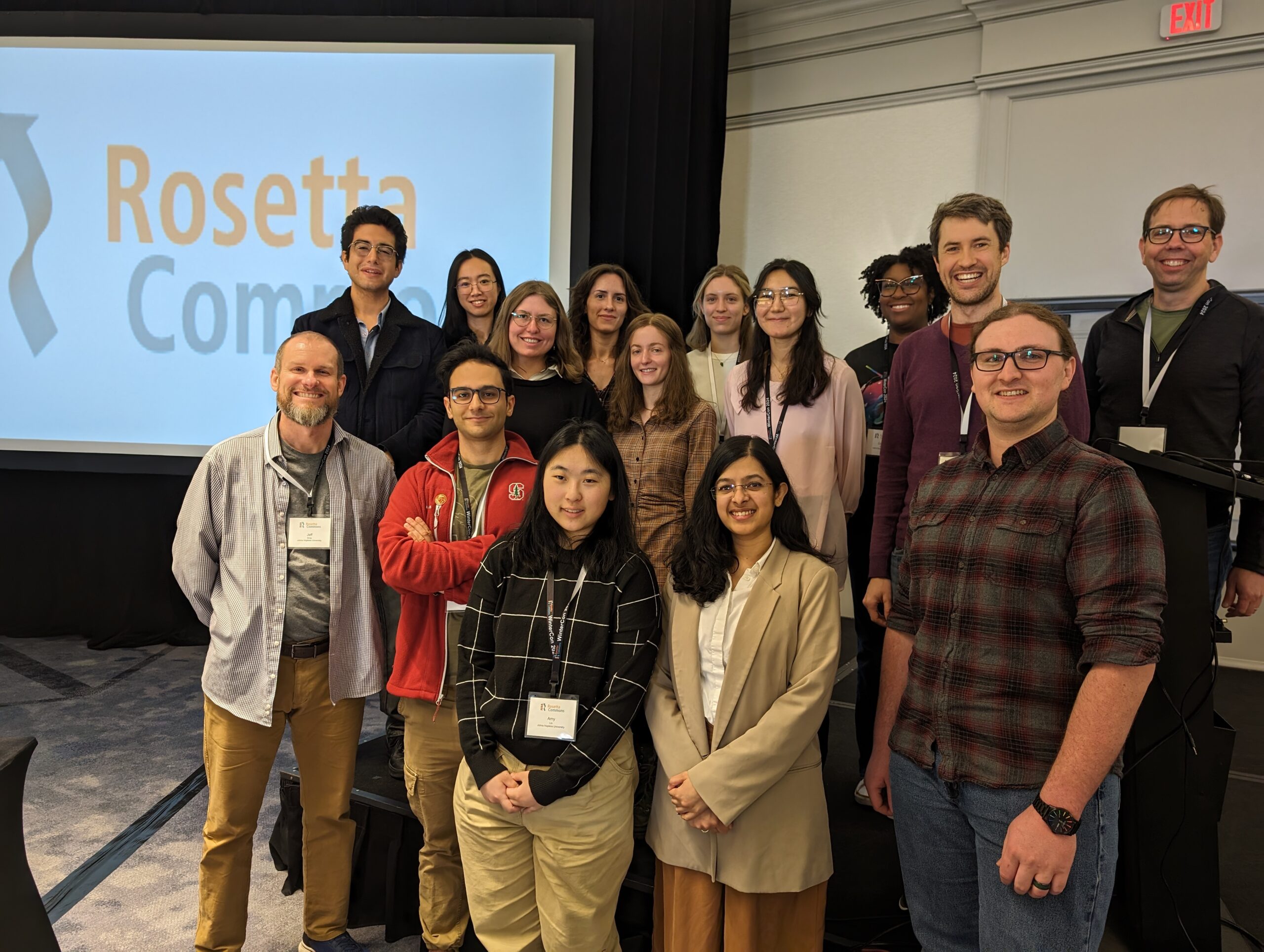

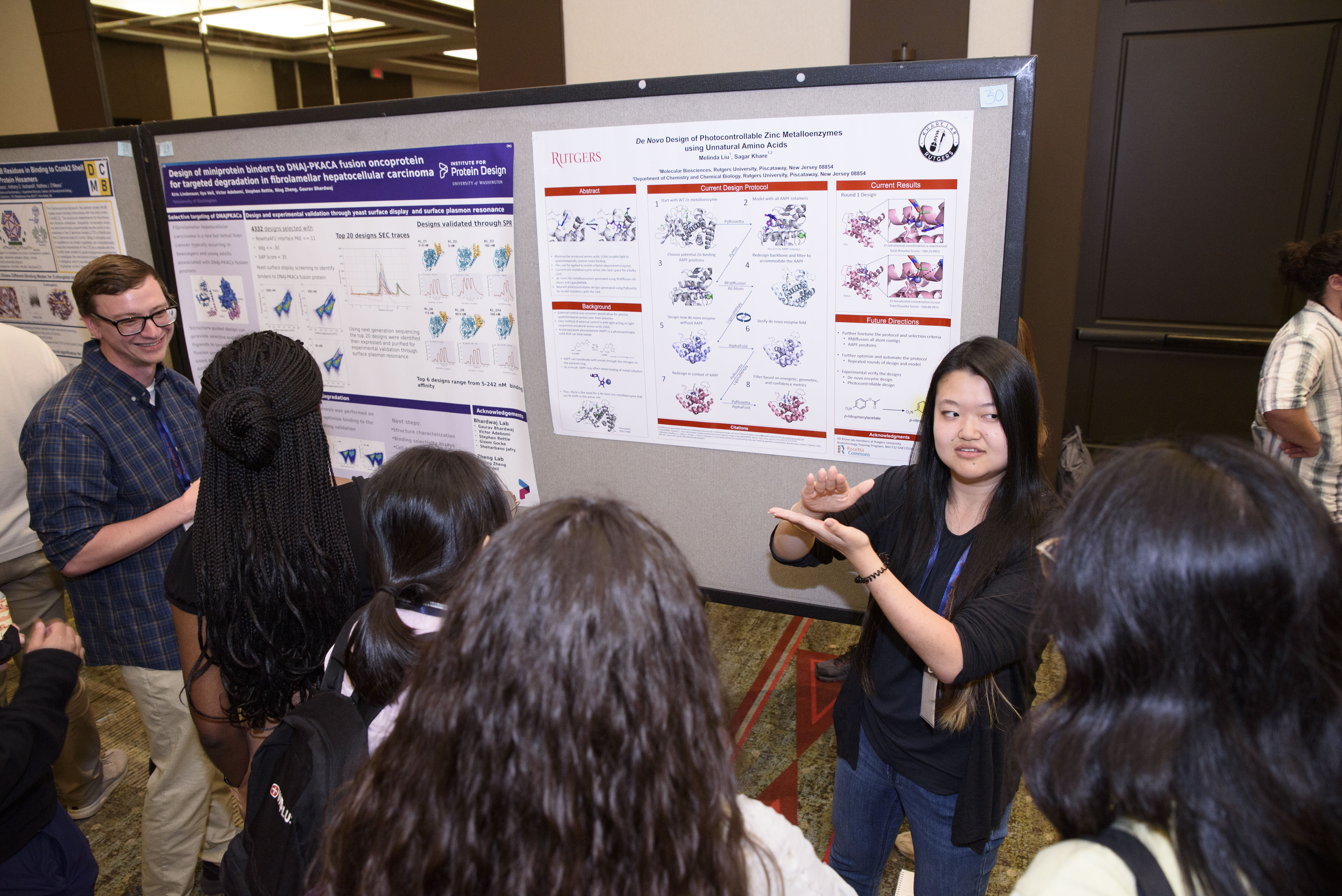
The Rosetta Commons Research and Mentoring for Postbaccalureates (RaMP) is a one-year fellowship program intended for students to gain research experience to succeed in PhD programs.
Trainees in this geographically distributed RaMP program participate in research using the Rosetta Commons software. The Rosetta Commons software library includes physics-based and deep learning algorithms for biomolecular modeling and design. It has enabled notable scientific advances in computational biology, including de novo protein design, enzyme design, ligand docking, and structure prediction of biological macromolecules and macromolecular complexes.
The application period for the 2026 - 2027 RaMP fellowship has closed. Invitations for interviews will be sent out starting on April 7, 2026.
The RaMP Provides:
-
- Rosetta Code School: where trainees will learn the inner details of the Rosetta Python code and community coding environment, so you are fully prepared to research using the software.
- Research experience: Trainees conduct hypothesis-driven research in their Mentor’s lab, with day-to-day guidance by an experienced PhD student or postdoc. Scholars participate fully in weekly lab meetings, attend weekly research seminars in their department, attend a vibrant PhD program retreat and a national conference of their choice.
- Participation: in the Winter Rosetta Conference, where you will connect with Rosetta developers from around the world.
- Compensation: Salary, health benefits, and funding for conference travel are included.
- Preparation: for graduate school applications and interviews.
- Community: Trainees come together each month for ‘Journal Club’ events to present and discuss their research with peers and faculty mentors. These meetings include professional development mini-lessons on topics like the NSF-GRFP, graduate school applications, research posters, and more.
- Project meetings: Trainees gain confidence by organizing, preparing for, and convening monthly project meetings with the program’s PI, Dr. Jeff Gray and Co-PI Dr. Matthew O’Meara. Scholars benefit both scientifically and professionally by building strong working relationships with multiple faculty members who are experts in their field of interest.
- Specialized mentoring: Mentors will participate in a four-part Mentoring Workshop series that will guide them in being an effective, self-aware, and understanding mentor. This series will be facilitated by Steven Thomas. The mentor, co-mentor, and participant will form a “mentorship triad,” a tight interpersonal structure functioning to enhance a student’s potential.
- Each participant will be supported by a stipend of at least $32,500 per year.
- Program dates are August 17, 2026 - August 16, 2027.
Labs
The projects listed below are examples of prior RaMP projects. Projects for the 2026–2027 cohort are tentative and subject to funding availability. More detailed information about upcoming research projects will be shared in spring 2026.
“Harnessing deep learning to Engineer Next-Gen Antibodies”
Antibodies make ideal pharmaceutical candidates because of their strong binding affinity, high
selectivity and ability to neutralize. However, there is an enormous combinatorial space of
plausible antibody sequences. Our lab has borrowed deep learning techniques from Natural
Language Processing (NLP) field to learn the semantics of protein sequences to better guide
design. In this RaMP project, the participant will apply language models to help design and
optimize therapeutic efficacy. The participant will learn biophysics, NLP, machine learning and
protein modeling.