
Reflections on Rosetta Commons’ Inaugural Biosecurity Fellowship
In October 2023, then-U.S. President Biden signed an Executive Order on the Safe, Secure, and Trustworthy Development and Use of Artificial Intelligence, one of a slew of policy actions by governments around that time in an effort to manage the risks that machine learning models may be misused as they diffuse into our world.
Unlike most policies at the time, however, this executive action contained a peculiar provision squarely focused on biological models—introducing reporting requirements for developers of AI models “using primarily biological sequence data and […] computing power greater than 1023 integer or floating-point operations.”
‘How are these models relevant to risk management?’ I wondered. ‘Is computing power an indicator of risk? What sort of burden might such requirements impose on developers? How are scientists thinking about the benefits and risks of these emerging technologies?’
In May 2024, I was honored to join Rosetta Commons as a Biosecurity Fellow, where I began to explore these questions and, in doing so, developed a deeper understanding of protein design science, technology, and this remarkable research community.
In this post, I recap highlights from this opportunity and share how the Rosetta Commons community is helping tackle present-day challenges in biosecurity and policy development.
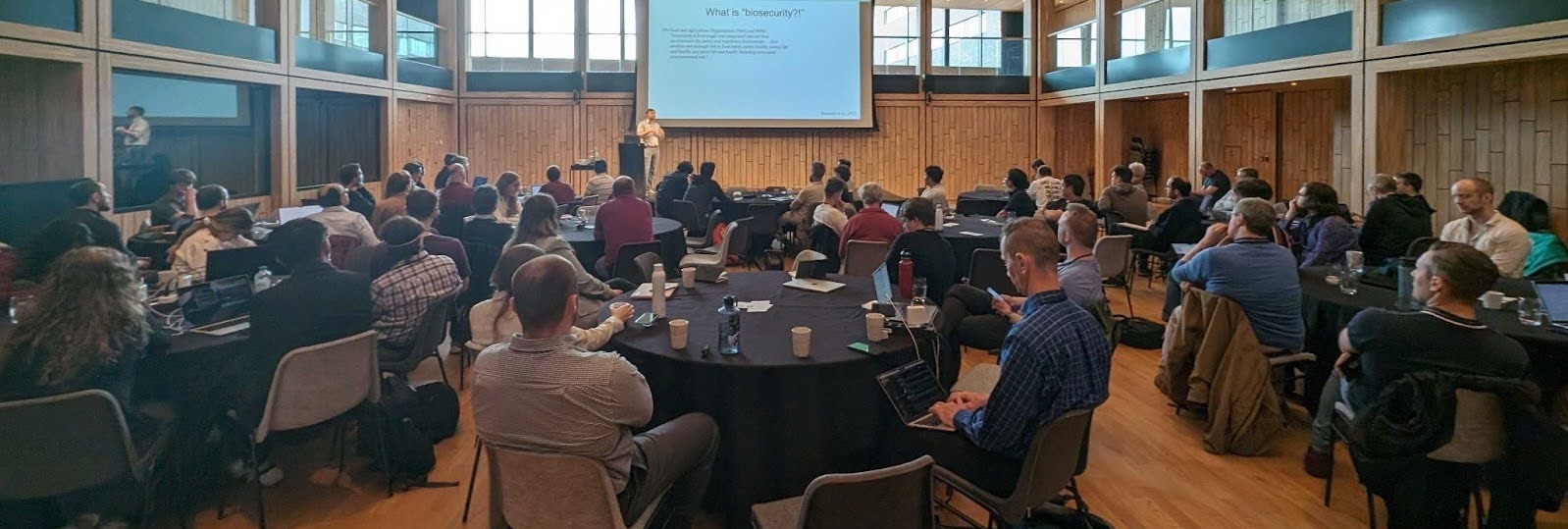
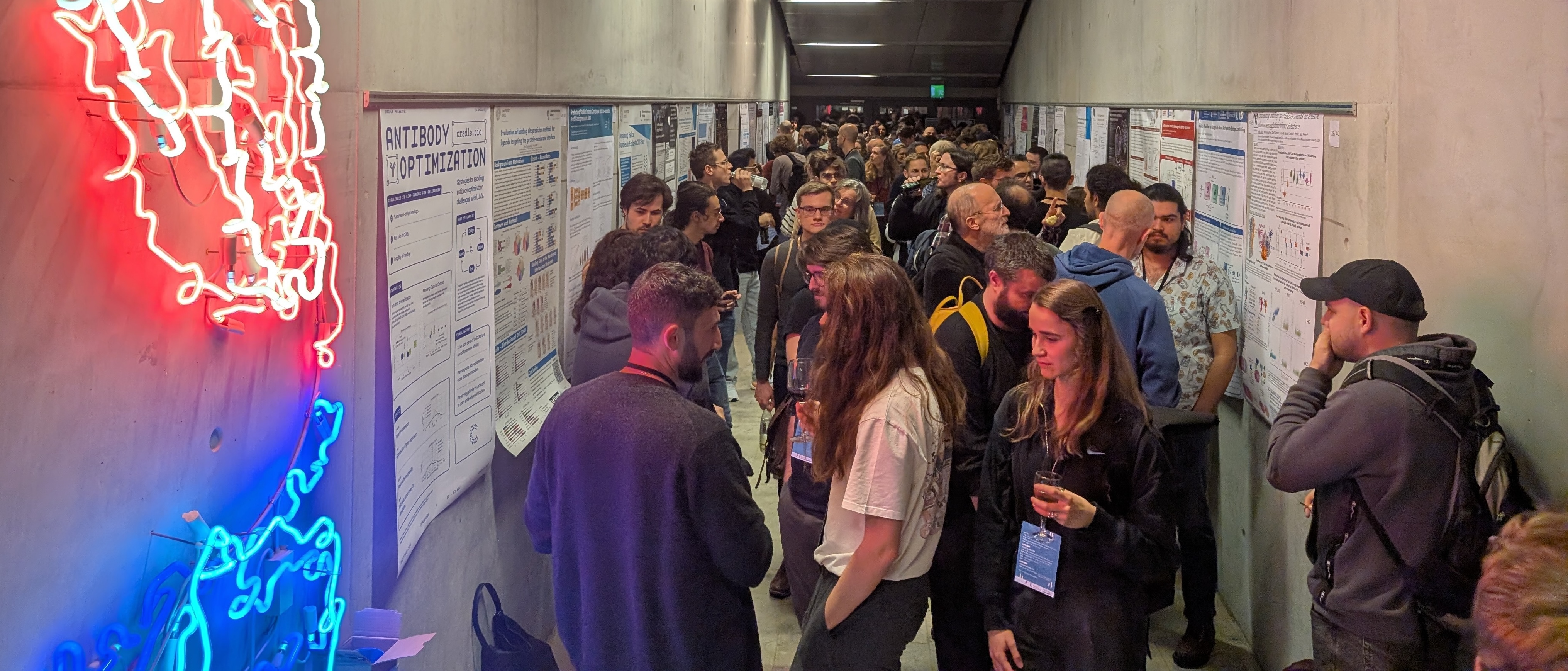
Workshops, discussion groups, and surveys. From the outset, I was eager to understand how scientists in the community view the benefits and risks of advances in protein design, and to hear feedback on emerging policy frameworks (like the executive order, described above). To this end, I organized workshops and discussion groups on biosecurity and policy-related topics at Summer and European RosettaCons, and ran surveys with audiences of scientists at conferences, lab meetings, and online. In these sessions, we explored questions such as: How would you define a ‘risky’ biomolecular modeling tool, capability, or application? What research, processes, or institutions would help us navigate the dual-use nature of these technologies? How could we apply these same technologies to address extant challenges in biosecurity, like gene synthesis screening? These workshops and surveys deepened my understanding of researchers’ perspectives and reaffirmed for me the value of scientists’ voices in policy discussions.


Training. One benefit of working alongside the Rosetta Commons community was the opportunity to learn directly from researchers at the frontiers of science. In August, I had the chance to participate in the Rosetta Workshop at Vanderbilt University, a bootcamp in protein modeling and design with state-of-the-art tools. I also made several trips throughout the year to the Gray Lab at Johns Hopkins University, where I had the chance to shadow a postdoc and participate in lab meetings.


Policy engagement. Halfway through my fellowship, the U.S. AI Safety Institute, housed within the National Institute for Standards and Technology, issued a Request for Information (RFI) on Safety Considerations for Chemical and Biological AI Models. With several volunteers from the community, I had the opportunity to collaborate on a public comment in response to the RFI, drawing on perspectives shared at workshops, discussion groups and surveys (above). Through this comment, we shared input on assessing dual-use capabilities of biomolecular AI models, opportunities for enhancing nucleic acid synthesis screening, and how the scientific community could be engaged for future policy development. More on our public comment can be found here.
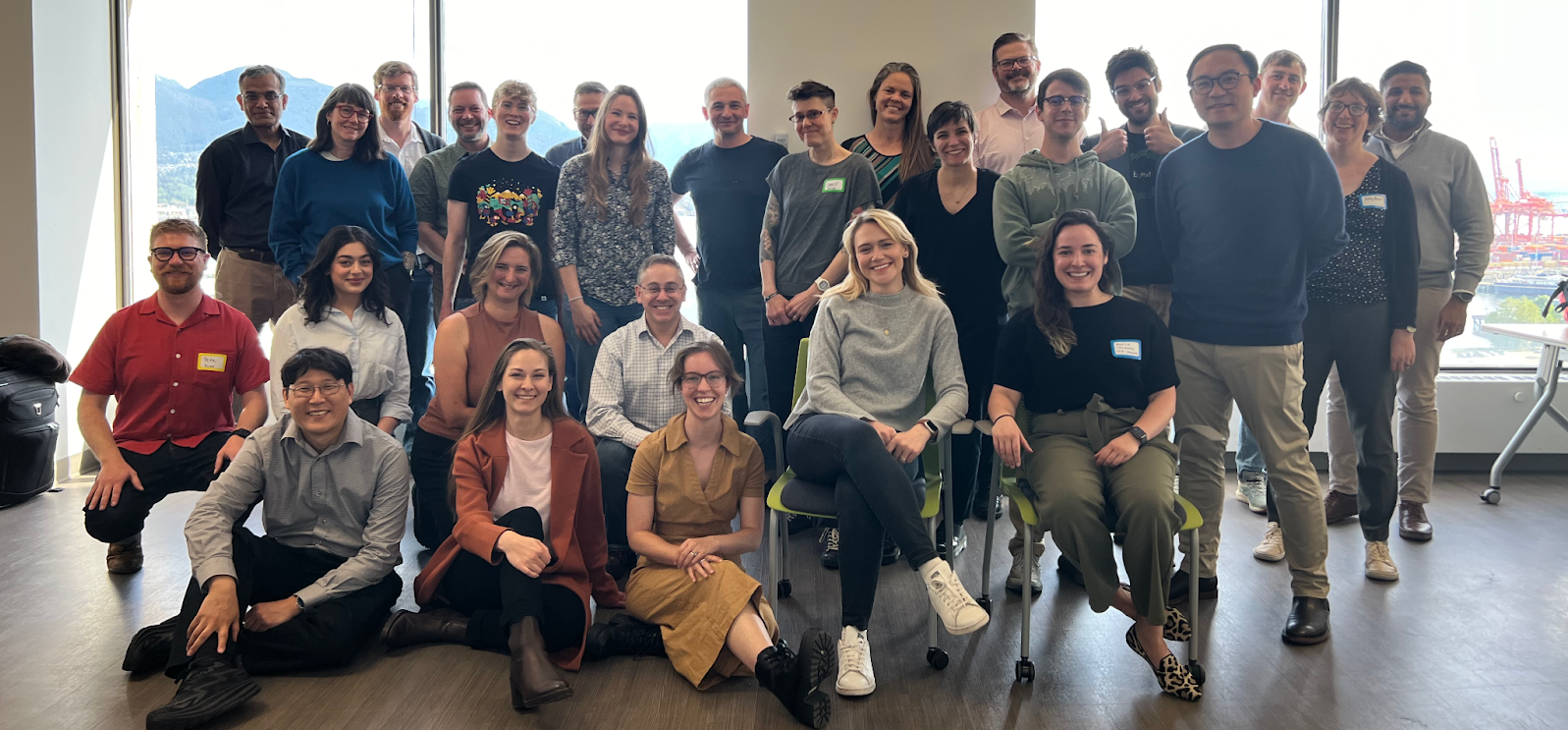
Convening. My fellowship culminated in co-hosting the ‘Responsible Biodesign Workshop’ in Washington DC, an event that convened ~40 in-person and ~80 stakeholders from biomolecular software development, biosecurity policy, and adjacent expert communities to advance implementation of the Community Values, Guiding Principles, and Commitments for the Responsible Development of AI for Protein Design statement. Through presentations and open discussions, participants identified priority areas for action and developed collaborative approaches to promote beneficial technological applications and mitigate potential misuse risks. A workshop report outlining Recommended Actions will be published soon. [Update: the report is live!]

Creating educational resources. One exceptional aspect of the Rosetta Commons community is the effort to foster an environment where everyone is empowered to contribute—from hosting workshops, to creating YouTube tutorials, and establishing an REU program. In this spirit, I sought to answer: How could we enable scientists to engage with current policy issues and research in biosecurity? And, in turn, how could we make protein design science more comprehensible to science and technology policy researchers?
To equip scientists to engage with policy and biosecurity matters, Dr. Jeff Gray and I collaborated on an educational module on biosecurity, including contemporary literature on emerging technology policy and nucleic acid synthesis security, which was then incorporated into undergraduate and graduate protein design courses at Johns Hopkins University.
“Students found the topic fascinating, eagerly engaging in nuanced discussions about community values, balancing openness and safety/security, and the inherent conundrum of dual use. Sam’s detailed comments on their essays made them a real part of this important and timely debate.”
Prof Jeff Gray, Johns Hopkins University
To help policy practitioners get their bearings in protein design, I coordinated a speaker series titled “Biodesign in Focus” as a lead-up to the Responsible Biodesign Workshop, mentioned above. The series, which is now available on YouTube, features:
- Introductory remarks by me and Andrew Hebbeler (CEPI)
- A Brief History of Protein Structure Prediction and Design by Mohammed AlQuraishi
- DL4Proteins: Open-source Notebooks for Teaching AI in Protein Design by Michael Chungyoun
- Vaccine Development to Combat Pandemic-level Threats Using AI in Protein Design by Clara Schoeder
As I wrap up this fellowship, I depart with admiration for the Rosetta Commons community and gratitude for those who participated in workshops, roundtable discussions, surveys, and enriching one-on-ones. My experience assured me of the importance of sustained dialogue between scientists and policy practitioners, and I appreciate that this community’s defining values—curiosity, mentorship, integrity, and scientific rigor—equip researchers to engage with these interdisciplinary efforts as the field evolves.
This fellowship was made possible by funding from Rosetta Commons licensing fund and Sentinel Bio, as well as fiscal sponsorship from the Open Molecular Software Foundation.

Samuel Curtis was a Biosecurity Fellow at Rosetta Commons and a Policy Researcher at the Open Molecular Software Foundation. He holds an MSc in Global Affairs from Tsinghua University through the Schwarzman Scholars program and a BA in Biochemistry, Biophysics, and Molecular Biology from Whitman College.