
Blog post
Tech Tea Time – New Community Meeting series

Our first TechTeaTime, a new community meeting series event, happened on January 26, with 46 people joining. Rafi Brent (Baker Lab, University of Washington) gave a tutorial on protein binder design with RFD3, which will be available on Youtube shortly. The meeting details for future meetings, including the Zoom link, can be found on the…
Read MoreQuarterly PyRosetta builds now available
We are happy to announce the availability of quarterly PyRosetta builds. These builds provide persistent wheel packages that are retained long-term (potentially indefinitely), making it straightforward to create reproducible PyRosetta environments across all supported build flavors and Python versions. This is now the recommended installation path for users who need stability and reproducibility. Below…
Read MoreStable de novo protein design via joint conformational landscape and sequence optimization

Why this research matters Protein design only works if a designed sequence reliably folds into the intended structure. In practice, many designs that look promising on a computer fail when tested in the lab. This study takes a direct, experimental approach to a simple question: which current protein design strategies actually produce stable proteins? Background:…
Read MoreDesigning new enzymes around catalytic arrays with Riff-Diff

Markus Braun, Adrian Tripp, and colleagues from the Oberdorfer lab at Graz University of Technology developed Riff-Diff, a computational pipeline that designs enzymes by scaffolding protein backbones around catalytic residue arrays. Read the full paper in Nature paper here. Why this research matters Designing enzymes from scratch could help tackle unmet needs in biocatalysis, therapeutics,…
Read MoreRFdiffusion3 is Now Available in foundry

The RFdiffusion3 (RFD3) training and inference code is now available through foundry. This third-generation model builds on RFdiffusion1 and RFdiffusion2, expanding the scope of what diffusion models can design. RFD3: Performs atom-level diffusion across both backbone and side-chain atoms Has a new denoising procedure that incorporates a forward step without conditioning information Restores symmetry design…
Read MoreBridging Borders in Protein Design in Latin America – The AI4PD Workshop in Patagonia

Puerto Varas, Chile — in November, the stunning landscapes of Chilean Patagonia, including the Llanquihue lake and the Osorno and Calbuco volcanoes, served as the backdrop for a groundbreaking scientific convergence. The EMBO Practical Course: Latin American Workshop on AI for Protein Design (AI4PD) 2025, co-organized by RosettaCommons members Cesar A. Ramirez-Sarmiento (UC Chile), Alena…
Read MoreRFAntibody creates epitope-specific antibody binders with atomic-level agreement
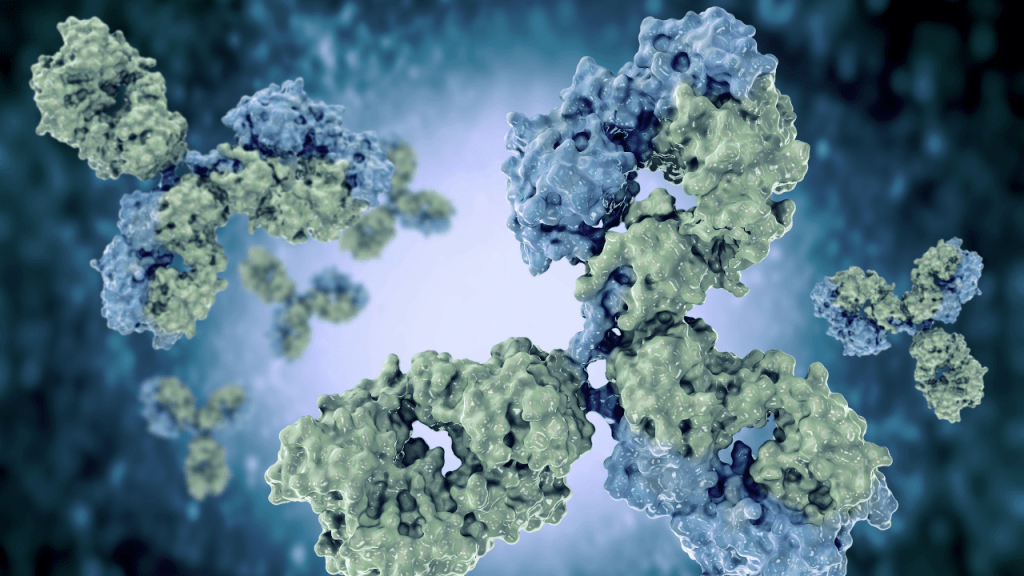
Designing antibodies that bind a specific epitope normally requires immunization or screening millions of variants. Traditional workflows take months and often miss therapeutically relevant binding sites. A new study shows that it is now possible to generate antibody candidates entirely on a computer, then confirm their structures experimentally, including at atomic resolution. Background Current antibody…
Read MoreNeil King named Deputy Director of UW’s Institute for Protein Design

The Institute for Protein Design (IPD) at the University of Washington has announced new leadership updates. Neil King, an Associate Professor in the Department of Biochemistry, has been appointed Deputy Director of IPD. Meanwhile, Lance Stewart, formerly Interim Executive Director (and earlier Chief Strategy & Operations Officer), is retiring from the organization. The Institute’s longtime…
Read MoreRFDpoly for design of RNA, DNA, and biopolymers is now available on GitHub

RFDpoly is a generative diffusion framework for the design of de novo biopolymers such as DNA, RNA, proteins, and mixed assemblies. Building on RFdiffusion, it extends the method beyond proteins by enabling the generation of backbones containing sugar and phosphate moieties to allow for the design of DNA and RNA structures. In the original RFdiffusion…
Read MoreTwo Rosetta community talks now live on TED

Two talks from our community — one by César Ramírez‑Sarmiento and one by Chris Bahl — are now live on the TED platform. 1. César Ramírez‑Sarmiento — “The new era of AI-powered protein design” In his talk, César Ramírez-Sarmiento, a 2025 TED Fellow and protein engineer, explores how artificial intelligence is rewriting the rules of…
Read More