
Blog post
Angela Colbert joins Rosetta Commons as Communications Lead

Angela Colbert, Ph.D., joined us on February 23 as our new Communications Lead. She comes to us from NASA’s Jet Propulsion Laboratory, where she spent the past five years leading science communication initiatives for major Earth science efforts. In that role, she translated complex climate and satellite data into clear, high-impact stories across web, multimedia,…
Read MoreFoundry Docker Image Now Available

Rosetta Commons now offers an official Foundry Docker image designed to make it dramatically easier to run cutting-edge biomolecular machine learning models without complex setup. Foundry is the central repository for a suite of ML models used in protein science—including RF3 (a next-generation biomolecular structure prediction network), ProteinMPNN inverse-folding models, and the newest RFdiffusion3 (RFD3)…
Read MoreEngineering a protein biosensor to detect common NSAIDs in wastewater

Why this research matters Pharmaceuticals often end up in wastewater after use, and monitoring them can be technically demanding. Traditional analytical methods are powerful but typically require specialized equipment and off-site processing, which can limit how frequently water is tested. This study describes a protein-based biosensor designed to detect two widely used “profen” non-steroidal anti-inflammatory…
Read MoreRegistration open: Immunogen design workshop at Vanderbilt

The Meiler Lab at Vanderbilt University will host an in-person workshop, Computationally Guided Immunogen Design with Rosetta and ML Tools, on April 13–15, 2025. The program is intended for academic and industry researchers seeking structured, hands-on training in computational immunogen design. What the workshop covers Over three days, participants will work through guided tutorials focused…
Read MoreDocumentation Playbook Now Available

The Documentation Playbook is a new guide designed to make writing and maintaining documentation for your software projects clearer and easier. The Documentation Playbook is part of the Playbooks Project from the Open Molecular Software Foundation (OMSF). What’s inside: An overview of the different types of documentation that are useful for open-source scientific software projects…
Read MoreUltra-large virtual screening using a motif-guided Rosetta pipeline validated in zebrafish
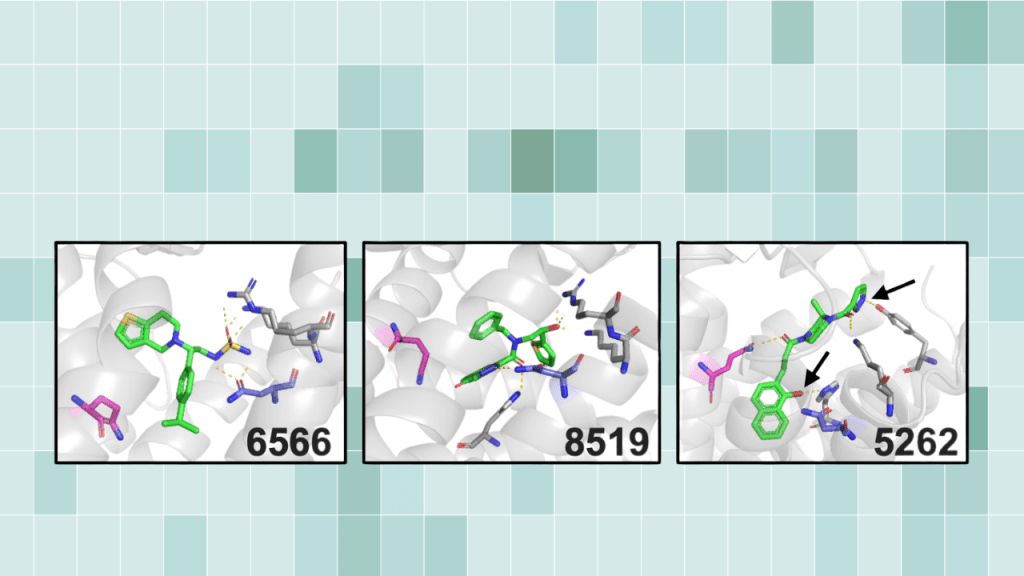
Broader significance: a screenable path from computation to in vivo Virtual screening can now evaluate billions of molecules. But that scale creates a practical problem. Docking pipelines often return thousands of candidates that pass computational filters, and predicted binding energies do not reliably predict what will work in living systems. This study introduces a workflow…
Read MoreUsing protein design experiments to guide energy-function development
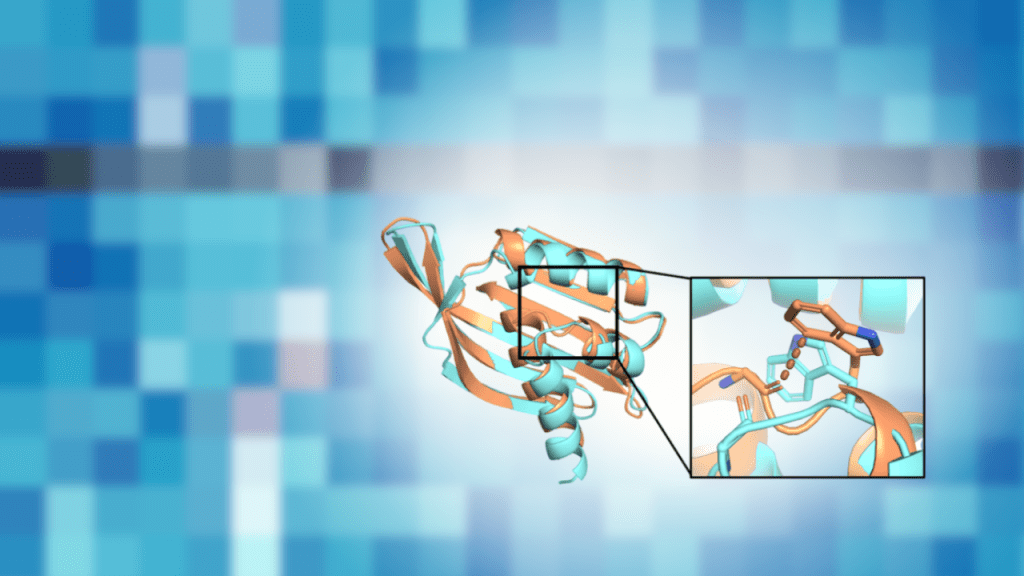
Why this matters When a protein is designed on a computer, tiny “impossible overlaps” between atoms can slip into the model. Those clashes may look small on-screen, but they can push a real protein to adopt a different shape than intended. In a December 2025 bioRxiv preprint, the authors show that steric clashing is a…
Read MoreRosetta Commons postdoc info sessions happening soon

The JEDI committee is hosting a two-part virtual info session spotlighting postdoctoral opportunities across the Rosetta Commons. Interested PIs will give short, focused overviews of their research and lab environments (1–2 slides each), followed by a live Q&A. This is a great chance for prospective postdocs to get a feel for different labs and research…
Read MoreProtein design workflows series kick off with Protflow and Ovo

On January 20, the protein design community kicked off a new Protein Design Workflows meeting series focused on how people are building, running, and scaling protein design pipelines in practice. The goal of this series is simple: create a space where developers and users can present real workflows, compare approaches, and identify opportunities for shared…
Read MoreOptimizing Stability in Dynamic Small-Molecule Binding Proteins
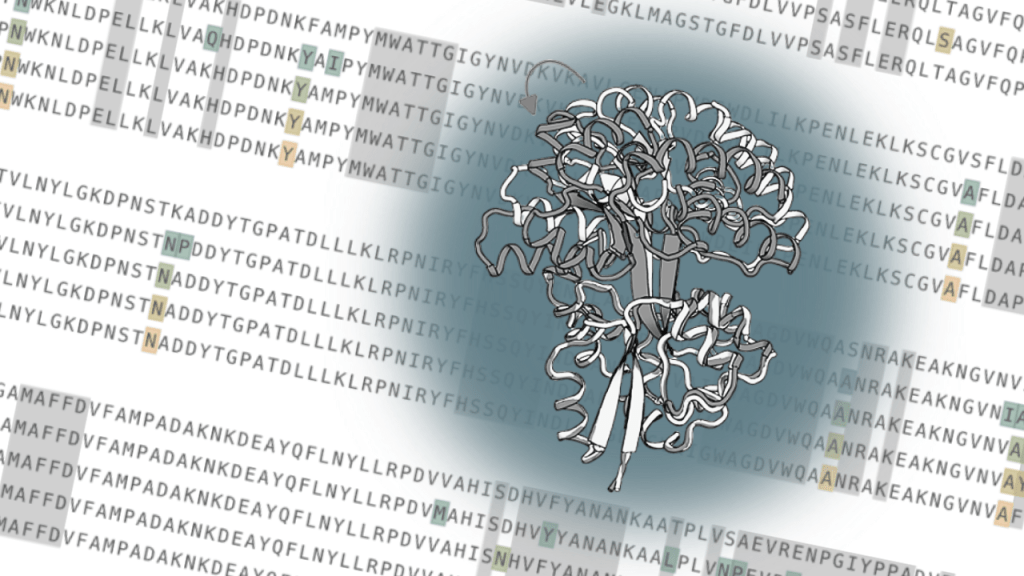
Why this research matters Many proteins must change shape to function. For proteins that bind small molecules, this motion is essential for activity but often makes them difficult to stabilize. Efforts to increase stability can unintentionally disrupt binding by shifting how the protein moves. This study examines how explicitly accounting for protein motion during design…
Read More