
Blog post
Integrating Mass Spectrometry Restraints into Rosetta and AlphaFold Modeling Pipelines
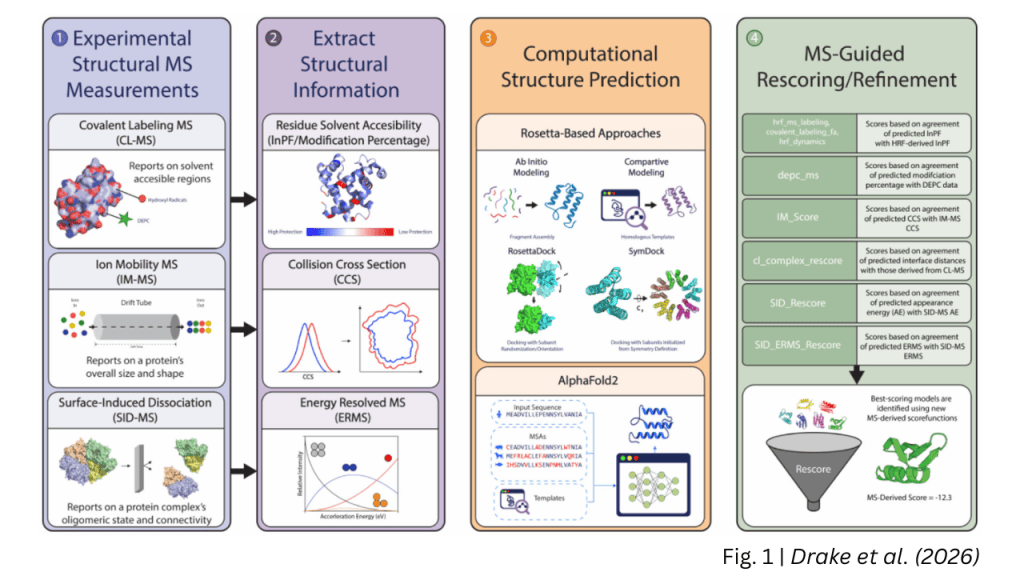
Key Takeaways Integrating mass spectrometry data with computational modeling platforms like Rosetta and AlphaFold2 improves the accuracy of protein structure and complex predictions. Experimental data from techniques such as covalent labeling, ion mobility, and surface-induced dissociation help distinguish native-like protein conformations from inaccurate computational outputs. A new set of tutorials and updated PyRosetta implementations make…
Read MoreBrazil’s Largest Open Science Event Introduces Thousands to Protein Design with Foldit

For the second year in a row, Brazil’s largest open science event introduced thousands of children and families to protein modeling and design. The event welcomed around 30,000 visitors from May 29–30, 2026, to the Brazilian Center for Research in Energy and Materials (CNPEM), where they participated in hundreds of scientific activities across various disciplines.…
Read MoreMotivated Trainees and Tutors Shine at FEBS Advanced Practical Course

On April 19-24, 2026, 36 international participants gathered in Blankenberge, Belgium, for the FEBS Advanced Practical Course: Generative AI for Protein Engineering. The course, supported by Rosetta Commons, offered an introduction to protein design, combining theoretical lectures, tool-specific tutorials, and a hands-on project, with a focus on Rosetta Commons tools. Participants were able to work…
Read MoreDebating the balance between model openness and biosecurity guardrails

Key Takeaways The scientific community is currently debating how to balance open research with biosecurity protections when it comes to biological AI tools. Biological AI tools are primarily designed for drug discovery, treating illnesses, and other broader societal benefits. Advancements in AI, such as chatbots, could provide opportunities for even inexperienced bad actors to misuse…
Read MoreBiohub releases open source models that utilize evolution to design disease target binders
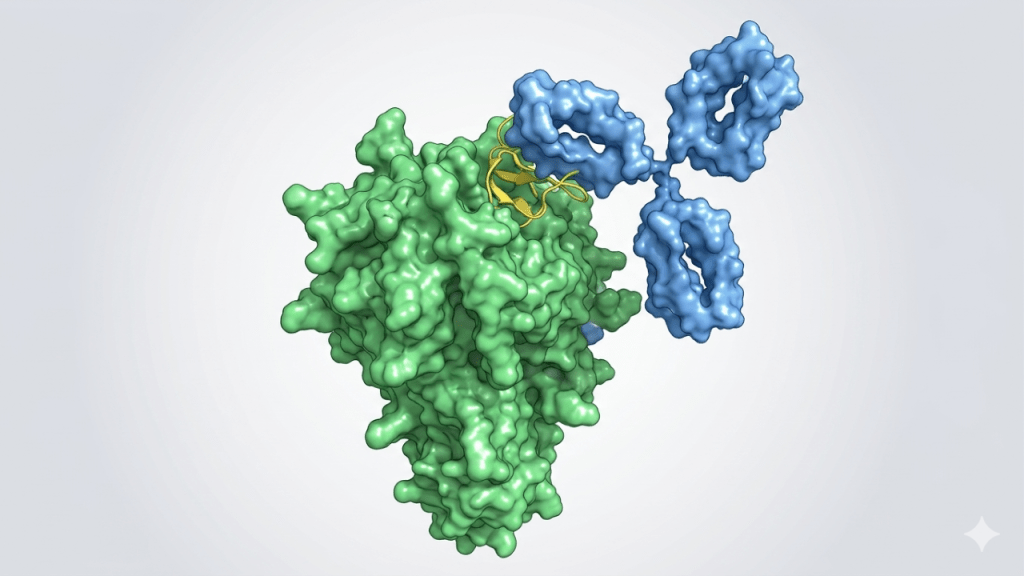
Key Takeaways Biohub has released open source ESM protein language models that use evolutionary data to streamline drug discovery and map functional protein spaces. ESMFold2 successfully generated lab-validated, high-affinity protein binders against five disease targets in cancer and immunology. The models were used to generate the ESM Atlas, which maps 6.8 billion sequences and 1.1…
Read MoreOpenBind releases initial structure and affinity dataset for structure-based machine learning
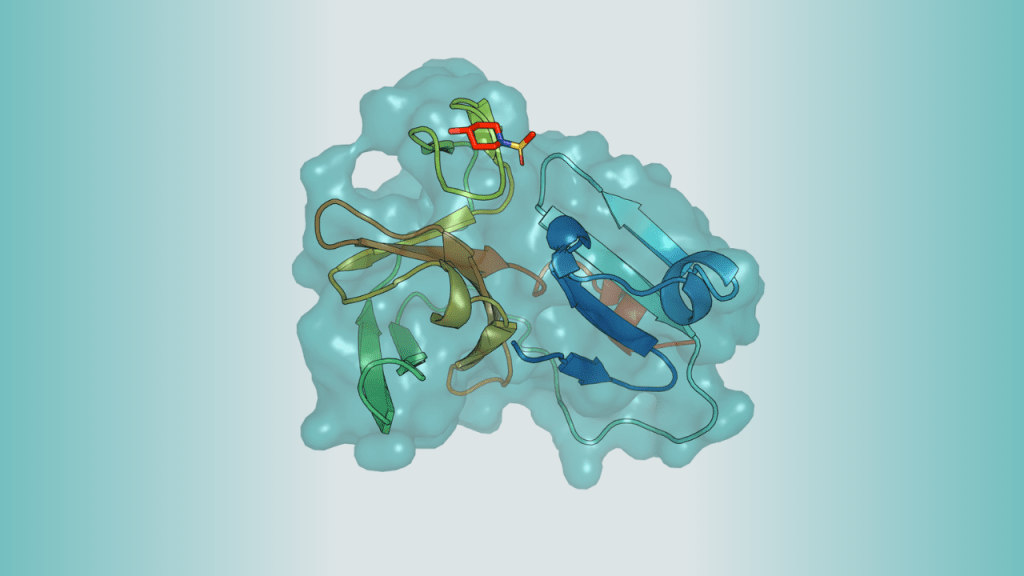
Key Takeaways OpenBind is generating dense, high-quality protein-ligand datasets that link structural data with binding measurements at a large scale. This release provides a realistic, structurally novel testbed linking high-resolution crystallographic data directly with biophysical binding affinity. The initial release targets the Enterovirus A71 (EV-A71) 2A protease (modeled via a closely related Coxsackievirus A16 surrogate…
Read MoreSummer 2026 Workshop Registrations Now Open

Two exciting week-long workshops this summer are now accepting applications. On July 20 – 24, 2026, the ML & Rosetta Intro Bootcamp will be held at John Hopkins University in Baltimore, Maryland. The bootcamp will be a blend of lectures and hands-on projects to introduce and then practice key concepts and skills with machine learning…
Read MoreSpeed Up PyRosetta Development with Autocompletion and Type Checking
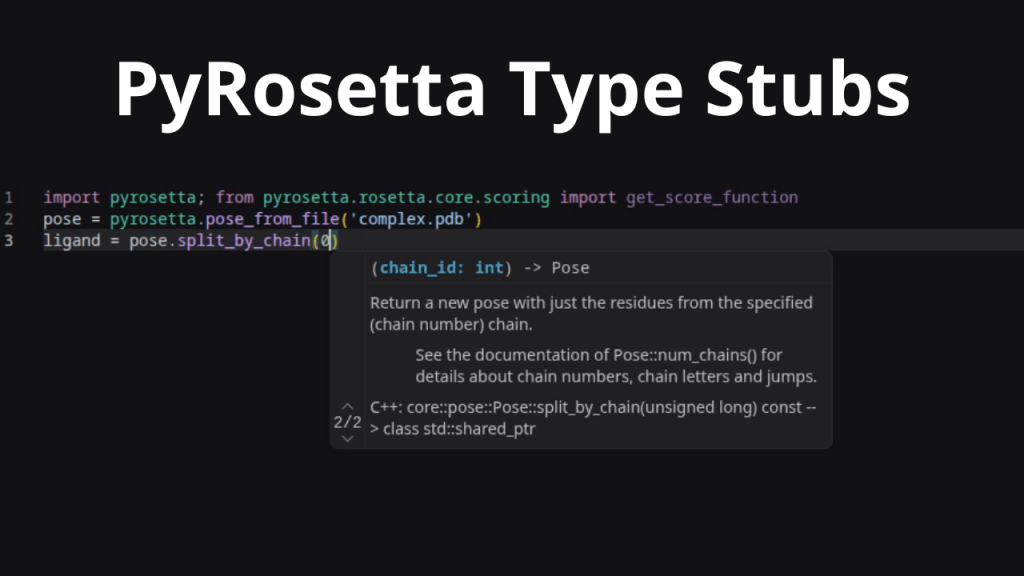
By Harrison Truscott PyRosetta, the Python interface to the Rosetta binary, now comes packaged with type stub files (.pyi). These files describe the module’s classes, methods, and variables, as well as function signatures, types of function parameters and return values, and descriptive docstrings. Type stub files can be used by the Integrated Development Environment (IDE)…
Read MoreA Zero-Shot Approach to de novo Metalloenzyme Design
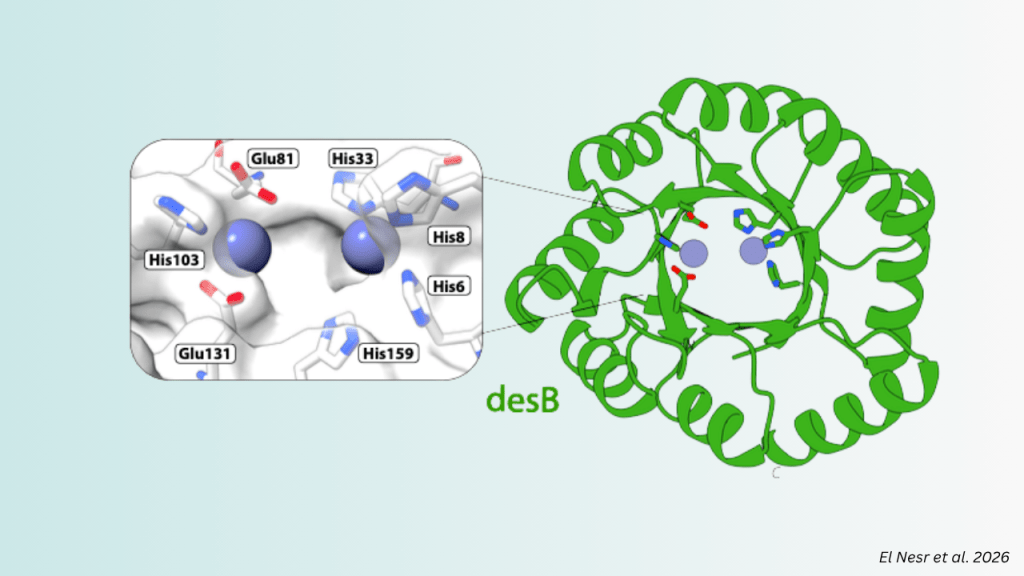
Key Takeaways: dEVA (design by EVolutionary Algorithm) is a framework that achieves the zero-shot design of a highly efficient metalloenzyme without any reliance on natural templates. Design objectives were tailored to the specific chemistry of metalloenzymes, in particular catalytic zinc sites, and from only three experimentally-tested designs found desB, the most efficient de novo designed…
Read MoreImmunogen Design Workshop Hosted by the Meiler Lab Cultivated Collaborations
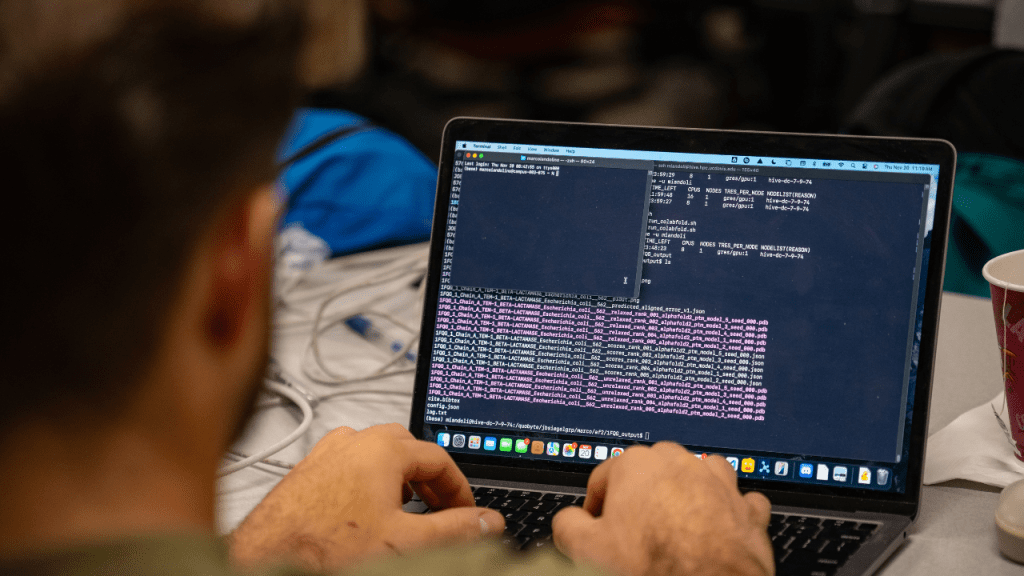
On April 13 – 15, 2026, fifteen participants from as far away as South Korea gathered at Vanderbilt University to learn about the Rosetta software suite. Attendees were a blend of industry, university, and non-profit affiliates at career levels from graduate students to principal investigators. The “Computationally Guided Immunogen Design with Rosetta and ML Tools”…
Read More