
Blog post
Introducing makeshift: Bringing Biomolecular NMR and Dynamics Analysis into Python
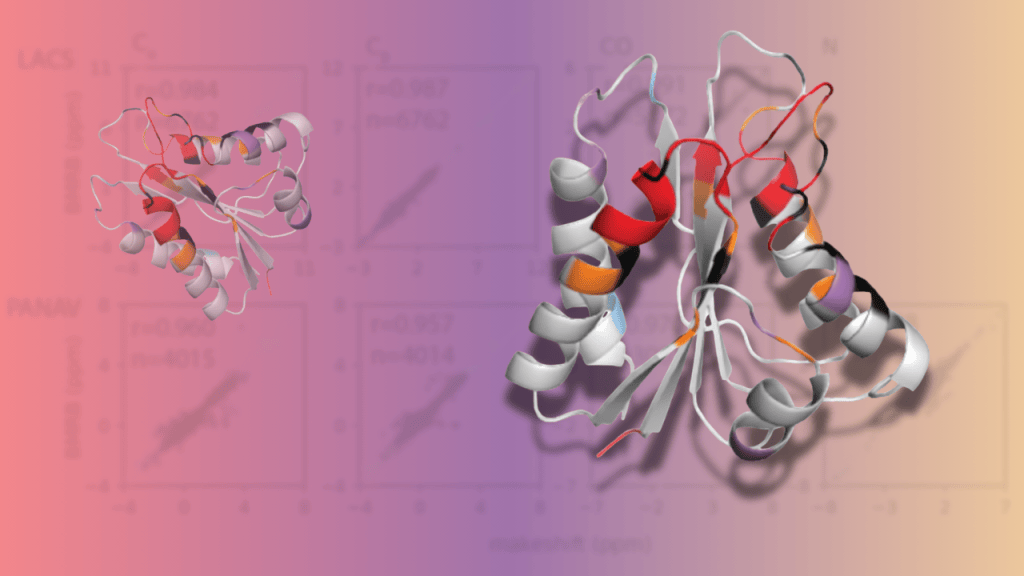
Key Takeaways makeshift is an open-source Python package that streamlines retrieving, curating, and analyzing biomolecular Nuclear Magnetic Resonance (NMR) data from the Biological Magnetic Resonance Data Bank (BMRB). It unifies scattered, standalone algorithms, including chemical shift re-referencing, backbone flexibility estimation, and relaxation dynamics, into standard Python workflows. Benchmarking confirms that makeshift’s Python re-implementations closely match…
Read MoreHigh-Throughput Protein Purification: From Linear DNA to Pure Protein in Three Days
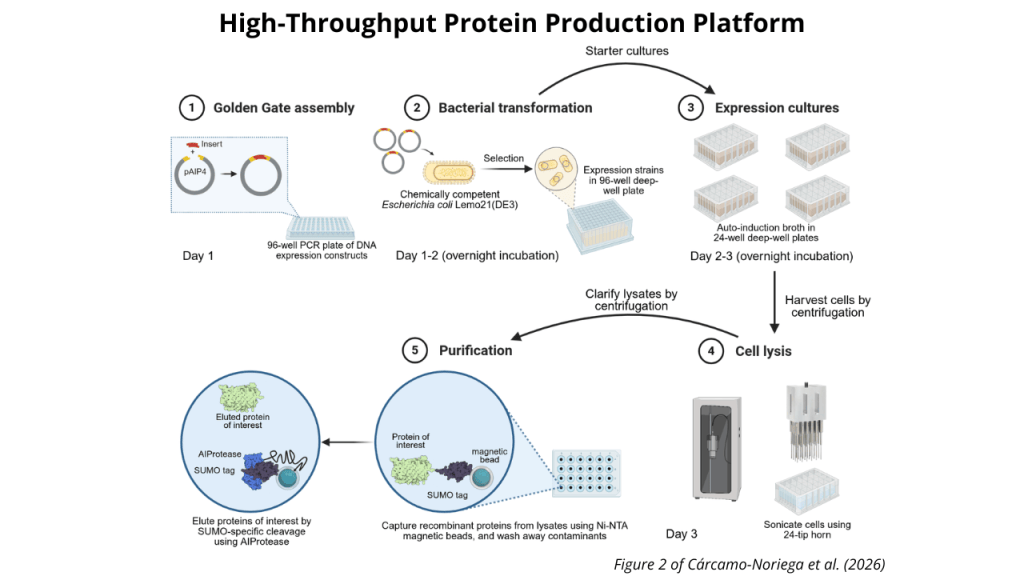
Key Takeaways An engineered His-tagged SUMO protease was developed to release SUMO-tagged proteins directly from nickel-charged magnetic beads. This on-bead cleavage eliminates conventional high-imidazole elution and simplifies downstream processing, enabling purified proteins to be recovered directly in the desired buffer. Bypassing unnecessary intermediate steps and integrating the process into a continuous workflow enables a complete…
Read MoreHow to Build a Model with AtomWorks: A Step-by-Step Guided Tutorial

Whether you’re training your first machine learning model or your tenth, preparing your data and building the infrastructure around your model can be a significant part of the work. For researchers developing machine learning tools for protein design, AtomWorks simplifies that process. The new “How to Build a Model with AtomWorks” tutorial provides a hands-on…
Read MoreScience, Connection, and Community: Summer RosettaCon 2026 Recap
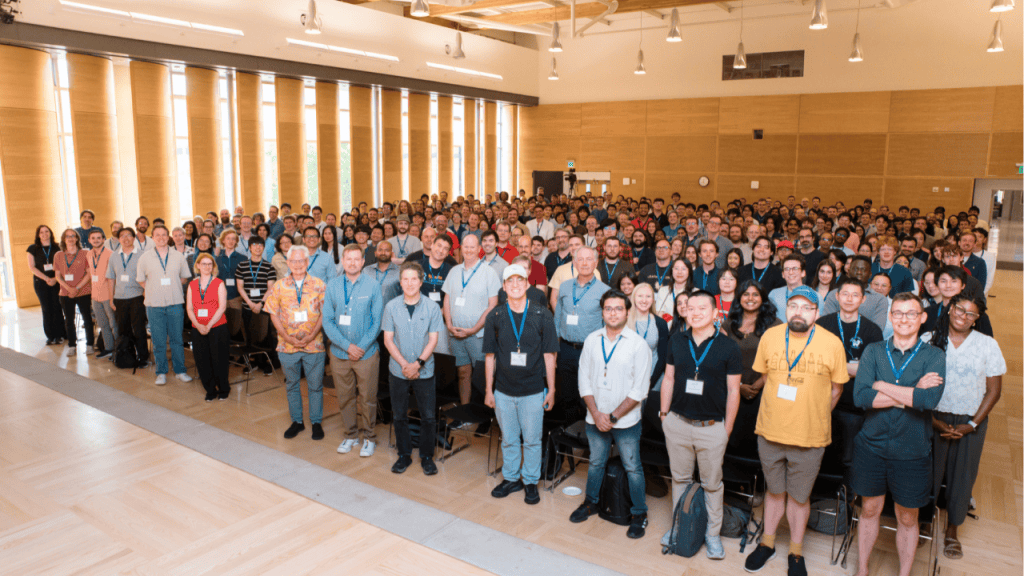
Featured image is a group photo of Summer RosettaCon 2026 in-person attendees. With over 600 in-person and virtual attendees, 56 scientific talks, nearly 200 posters, 16 breakout sessions, 5 keynotes, 4 career panels, 3 tutorials, and countless networking opportunities, Summer RosettaCon 2026 was our largest event to date. Hosted for the first time at the…
Read MoreREU Trainees’ Research Projects Highlight Exciting First Steps in Biomolecular Research

REU trainee Tony Peonio presenting his lightning talk at Summer RosettaCon 2026. This is part three of a three part series about the Rosetta Commons REU experience. How do you remove sargassum blooms impacting coastal marine ecosystems? Can we design an enzyme that breaks down fluorochemicals? How can we reduce chronic pain and inflammation in…
Read MoreA Summer of Science: REU Trainees Conduct Research at Host Labs, Present at Summer RosettaCon 2026
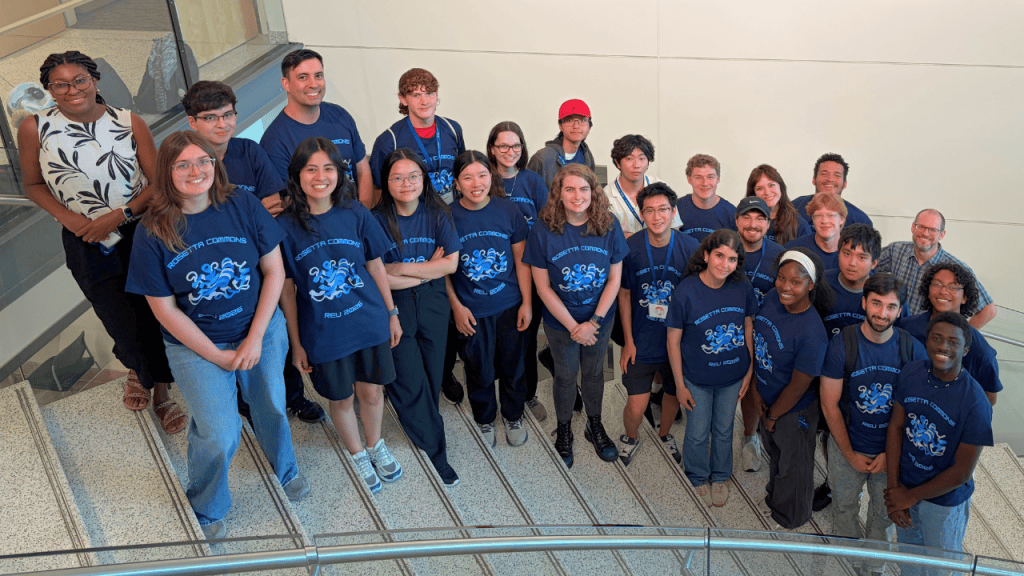
Featured image is the 2026 REU cohort with Program Manager Camille Mathis and PI Jeffrey Gray. This is part two of a three part series about the Rosetta Commons REU experience. Following an intensive week at Code School, Rosetta Commons Research Experience for Undergraduates (REU) trainees departed for an eight-week research experience at host laboratories…
Read MoreCoding, Collaboration, and Camaraderie: REU Trainees’ Introductory Bootcamp 2026
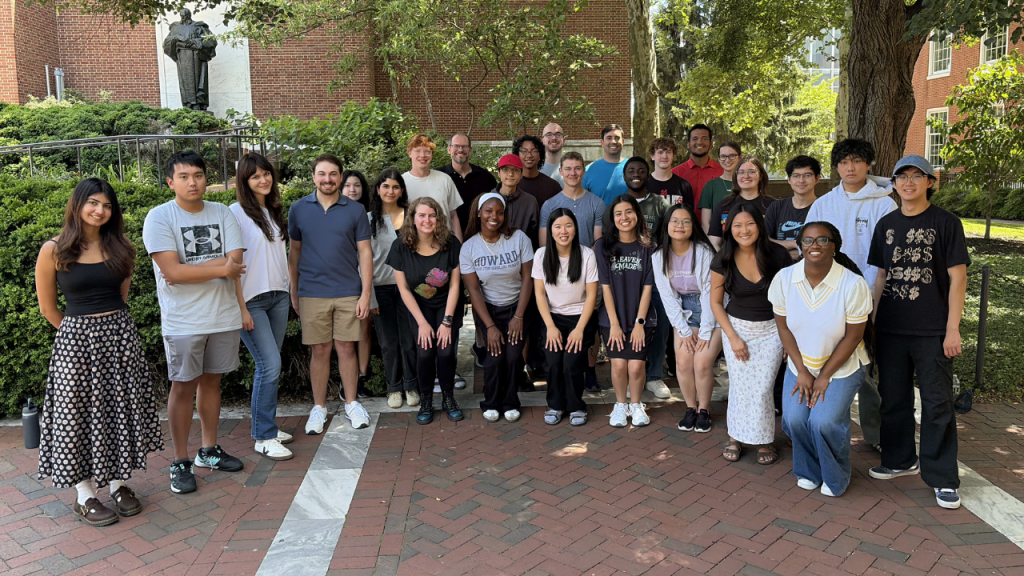
Featured image is of Code School 2026 attendees, including REU trainees, instructors Nate Felbinger and Miranda Simpson, teacher assistants Briana Whitehead, Vani Lorish, and Zhazira Iskakova, and PI Jeffrey Gray. This is part one of a three part series about the Rosetta Commons REU experience. For over a decade, on the first week of June,…
Read MoreTwo-phase computational pipeline yields high-affinity de novo BMP-2 binders for bone regeneration
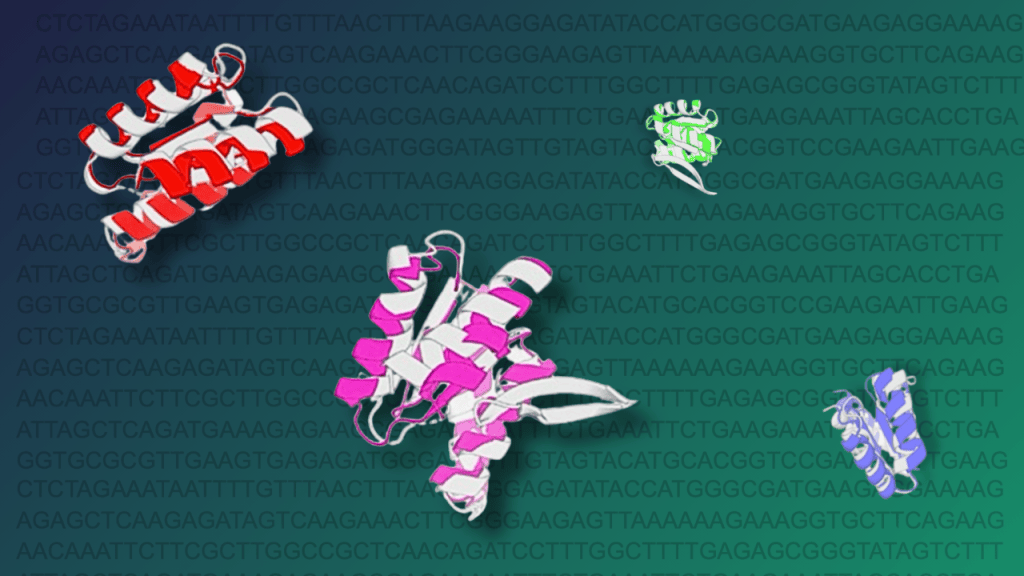
Key Takeaways By combining Rosetta-based motif grafting with deep-learning tools like RFdiffusion, ProteinMPNN, and AlphaFold2, a two-phase approach successfully generated functional binders where Rosetta-based docking and scoring alone failed. The lead binder, BB5523, demonstrated high affinity and specificity with an apparent KD of 2.07 nM for BMP-2, backed by mutational analysis confirming T42 as a…
Read MoreDe Novo Protein Design Overcomes Gene Editing Limits to Sustain CAR-T and TCR-T Cell Function

Key Takeaways De novo designed proteins bind and modulate entire target families simultaneously, bypassing the translational hurdles of multi-allele gene editing. The OUTLAST Regulator platform employs three distinct functional strategies, Designed Degraders, Transcription Factor Modulators, and Common Substrate Modulators, to rewire complex cell fate decisions. Pan-NR4A OUTLAST Regulators significantly enhance CAR-T and TCR-T cell functional…
Read MoreNew OpenBind-0 model and dataset benchmark co-folding tools in drug discovery
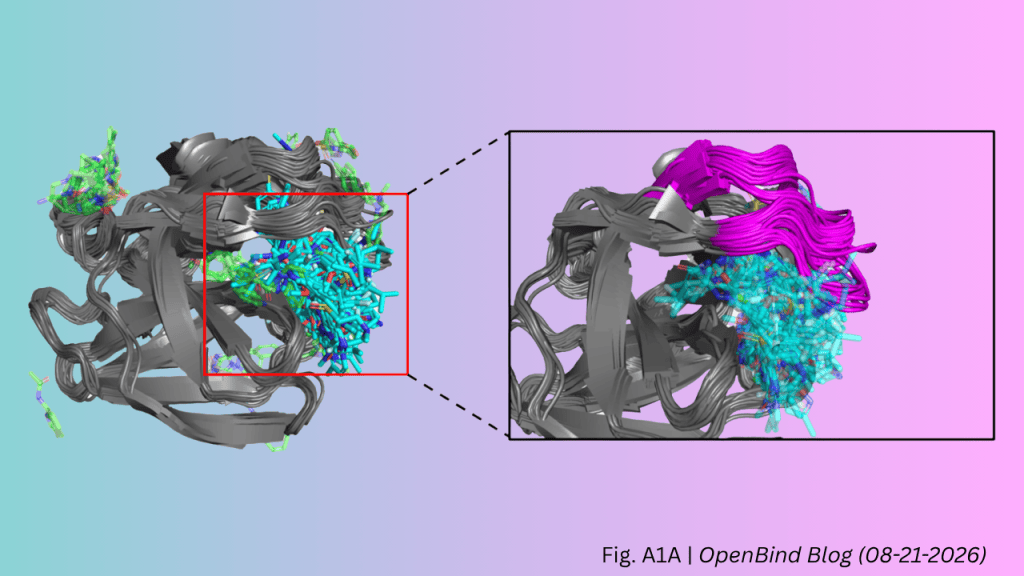
Key Takeaways OpenBind-0 (OB0) is a fully open-source co-folding model built on OpenFold3, trained on Protein Data Bank (PDB) data, and optimized for predicting protein–small-molecule complexes. Alongside the model, a discovery-relevant benchmark dataset of 717 new ligand-bound structures capturing fragment-to-hit progression across FatA and RdRp targets was released. Evaluation across targets shows wide performance variability,…
Read More