
Uncovering the Origins of rheumatoid arthritis (RA) Autoantibodies: New Insights from the community
A newly published study from the labs of Felipe Andrade and Rosetta Commons PI Jeffrey Gray, titled “Anti-citrullinated protein antibodies arise during affinity maturation of germline antibodies to carbamylated proteins in rheumatoid arthritis,” provides important new insight into the molecular origins of rheumatoid arthritis (RA). Led by Marta Escarra-Senmarti, Michael Chungyoun, Dylan Ferris, and colleagues, the study shows that anti-citrullinated protein antibodies (ACPAs) — hallmark biomarkers of RA — evolve from germline antibodies that originally target carbamylated proteins.
These two antibody families recognize structurally similar post-translational modifications, yet they are implicated in distinct pathological processes. The study found that somatic hypermutations during affinity maturation cause antibodies to shift specificity from carbamylated to citrullinated proteins — a key insight into how RA-related autoimmunity might develop.
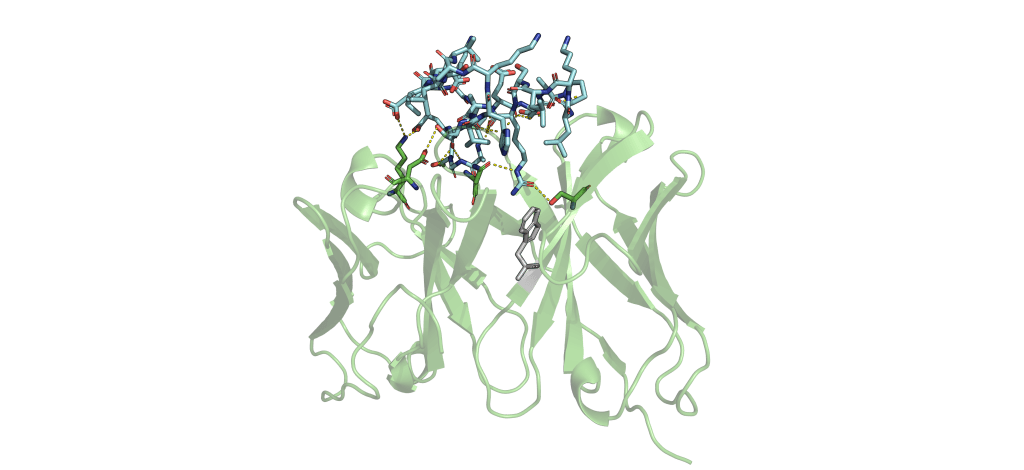
Highlighting the technological leap, co-author Michael Chungyoun shared on LinkedIn that the team used next-generation all-atom AI structure prediction tools to model antibody-antigen complexes with high accuracy, despite the presence of non-canonical amino acids. They benchmarked multiple new tools — AlphaFold 3, Boltz-1, Chai-1, Protenix, and RoseTTAFold-All-Atom — and found that Chai-1 outperformed others. The team then used Chai-1 to visualize how subtle structural differences drive antibody specificity in antibody-antigen complexes not represented in the Protein Data Bank.
This interdisciplinary work advances both immunology and AI-driven protein modeling, underscoring Rosetta Commons’ role at the intersection of biomedical discovery and computational innovation.
Anti-citrullinated protein antibodies arise during affinity maturation of germline antibodies to carbamylated proteins in rheumatoid arthritis – read here